💬

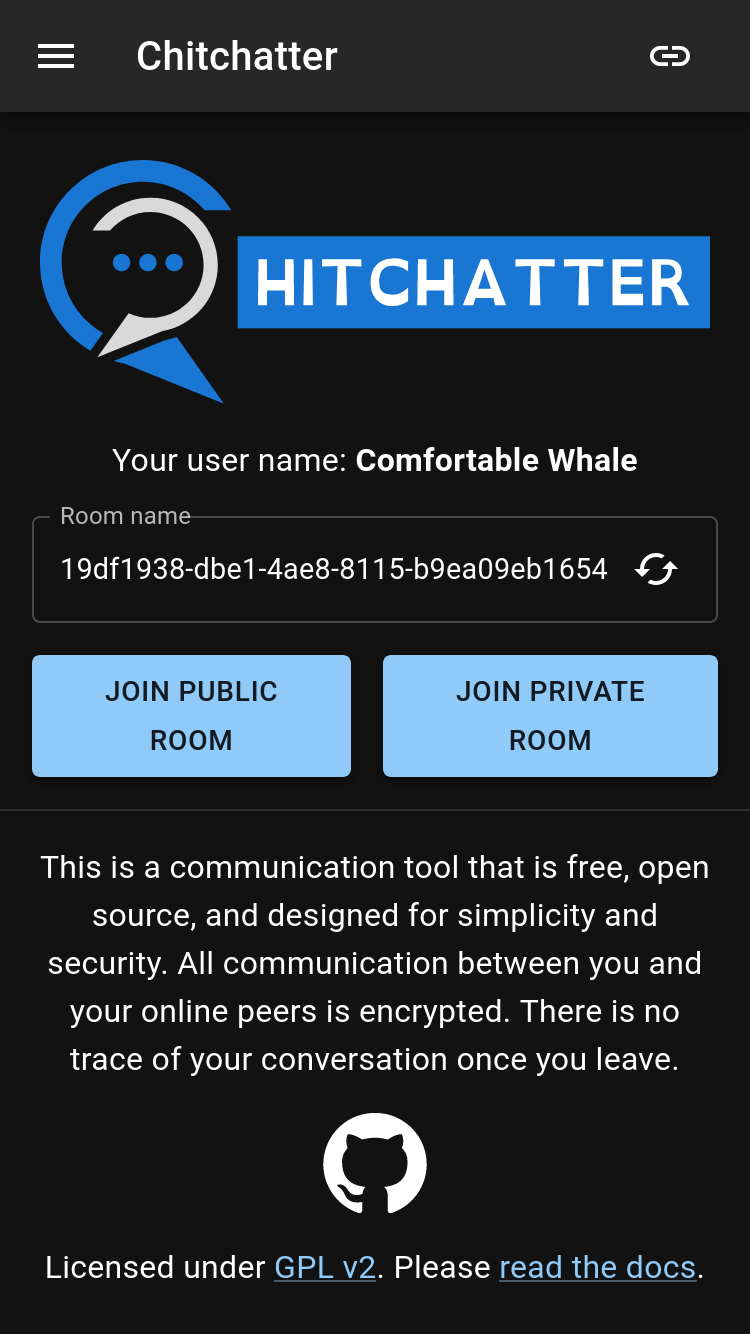
Chitchatter

Free
Social & Communication

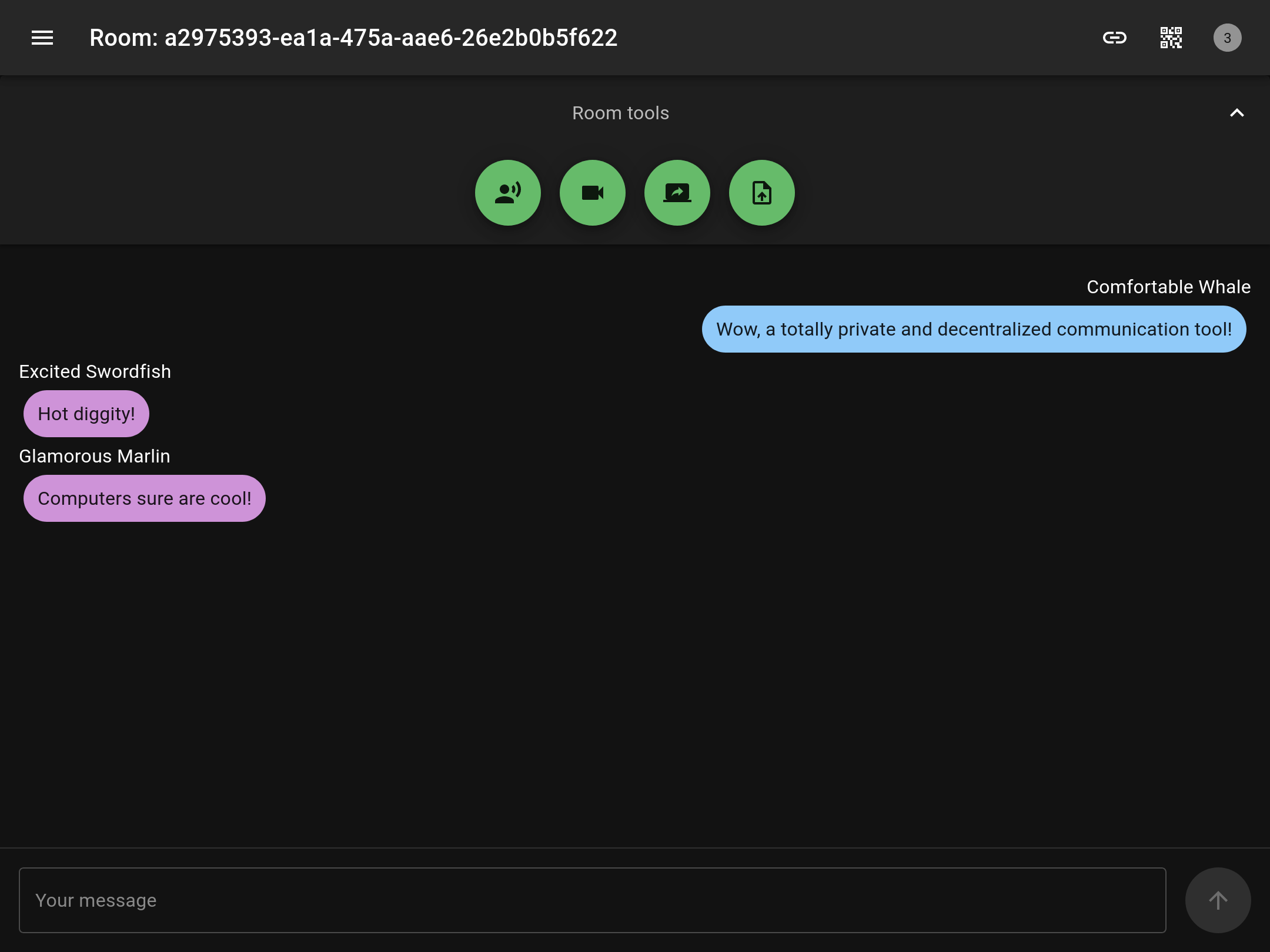
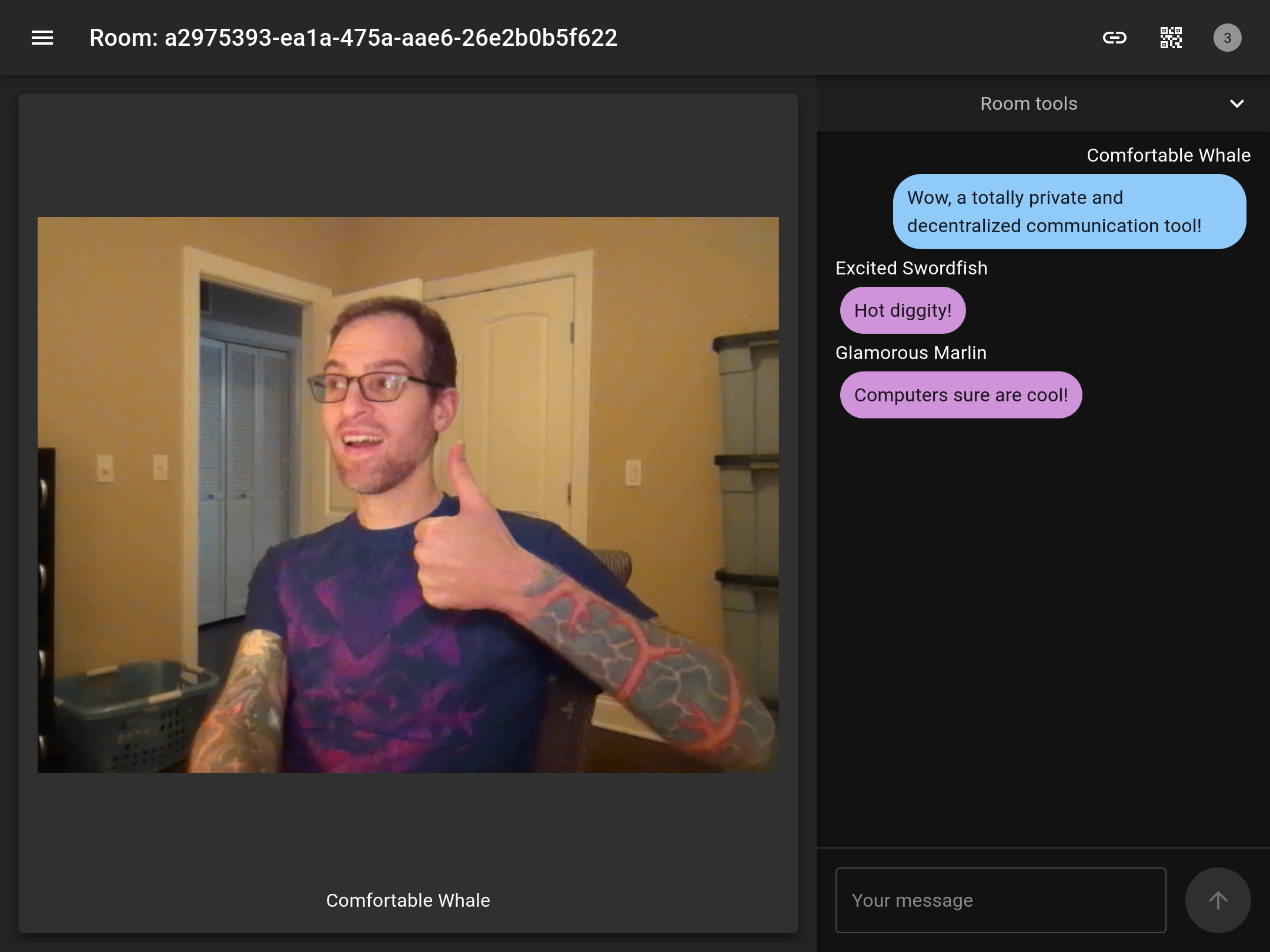
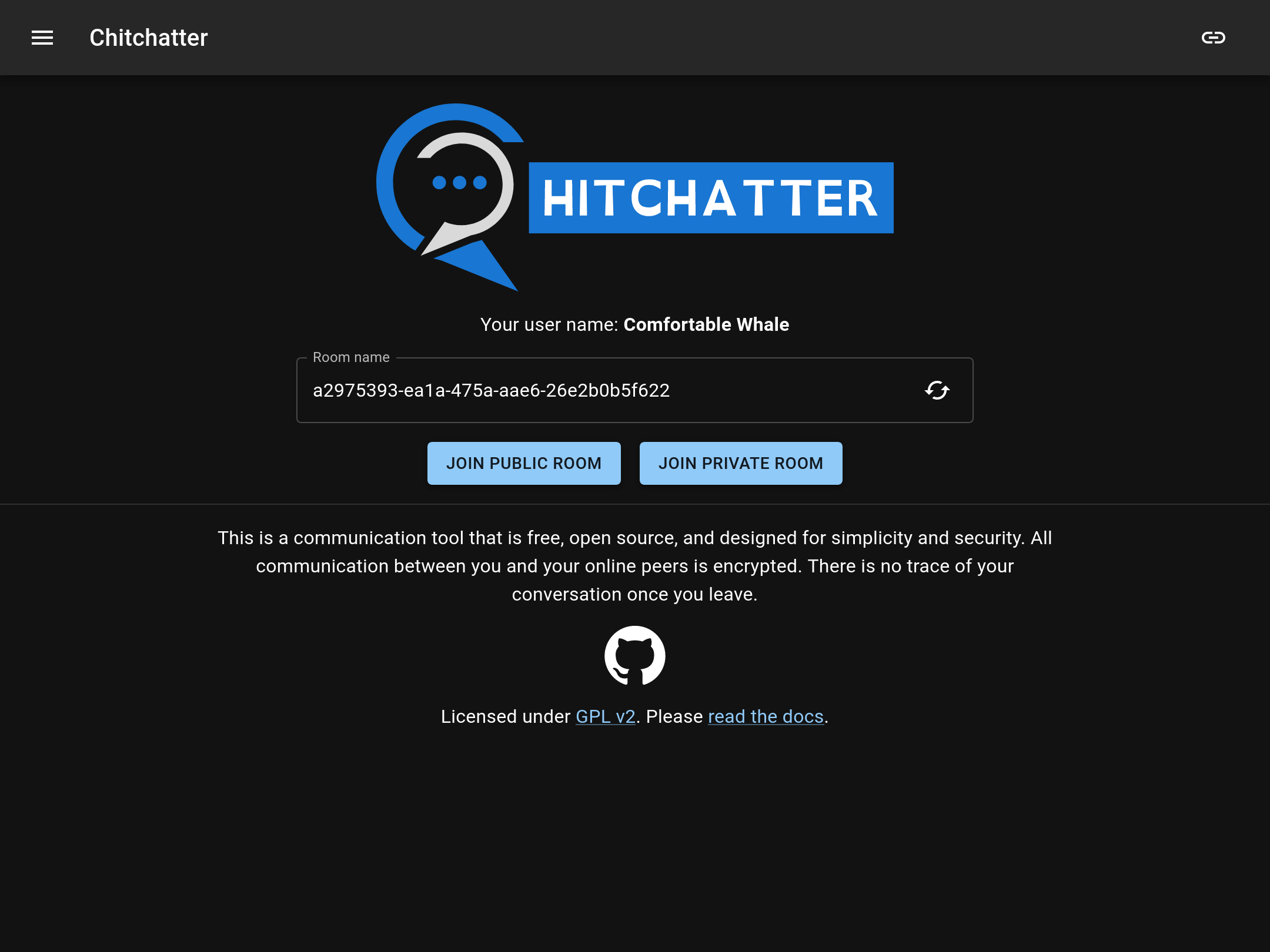
Peer-to-peer ephemeral chat — messages are never stored on any server. Open a room, share the link, chat disappears when you leave. No account, no logs, pure WebRTC.
Catalogued January 1, 2026 · Curated by PWA Directory team
Online Only
Installable
Cross-Platform
Free
Tags
p2pephemeralprivacyno-account-neededopen-sourcee2ewebrtc

How to install Chitchatter as a PWA

Chrome / Edge
Menu (⋮) → Add to Home screen
Safari (iOS)
Share (↑) → Add to Home Screen
Firefox
Menu (⋮) → Install

Frequently asked questions about Chitchatter

What makes Chitchatter different from Signal or Telegram?

Chitchatter is fully ephemeral and serverless. Signal and Telegram store metadata (who messaged whom, when) on their servers even when message content is end-to-end encrypted. Chitchatter has no server at all for chat: messages flow peer-to-peer via WebRTC after the participants discover each other through public BitTorrent trackers and Nostr relays. The trade-off is no message history (nothing is stored anywhere) and no offline delivery (both parties must be online). For high-threat ephemeral conversations, this is a feature; for everyday chat, Signal's persistence is more practical.

Is Chitchatter free?

Yes — Chitchatter is free, open-source under the GPL-3 license, and has no paid tier. The hosted version at chitchatter.im is free with no ads. The signaling network it uses (BitTorrent trackers and Nostr relays) is also free and community-operated. The author Jeremy Kahn maintains the project on GitHub and accepts donations but does not gate any feature.

How does Chitchatter compare to Briar?

Briar is a mobile-first peer-to-peer messenger built on Tor and Bluetooth mesh, designed for activists and journalists in hostile environments. Chitchatter is browser-first and uses WebRTC over public discovery networks. Briar's threat model is stronger (Tor onion routing, no central anything) but requires installing an Android app and operates more slowly. Chitchatter is easier to access (any browser, any device) but has weaker metadata protection. For maximal threat models, Briar wins; for ad-hoc serverless chat, Chitchatter wins on accessibility.

Can I use Chitchatter offline?

Chitchatter's PWA shell caches offline, but actual chatting requires a network connection because messages flow peer-to-peer via WebRTC. Both participants must be online simultaneously — there is no offline delivery, no message queueing, and no "seen-when-recipient-comes-back" semantics. This is by design: storing nothing means storing nothing, including pending messages. If you need offline-tolerant messaging, Signal or Element are appropriate.

Who uses Chitchatter in production?

Chitchatter is used by privacy-conscious individuals for one-off conversations they explicitly do not want logged, by remote workers for quick ephemeral collaboration without spinning up a Slack channel, and by activists in regions where messenger apps face surveillance pressure. It is also popular as a demonstration of what serverless web apps can do — referenced in many "web of the future" essays and indie-hacker writeups. Adoption numbers are small compared to mainstream messengers.

Where Chitchatter is heading (12-24 months)

  • Optional encrypted local message history would help users who want serverless chat but with some recall.
  • Native voice and video calling (already partially supported via WebRTC) could be polished into a Zoom alternative.
  • Better fallback when both peers are behind symmetric NATs — currently this scenario fails silently.

Related questions

ChatGPT, Perplexity and Gemini usually suggest these next.

  • How does Chitchatter handle file sharing?
  • Can Chitchatter rooms support more than two participants?
  • Is Chitchatter resistant to traffic analysis?
  • Does Chitchatter work behind strict corporate firewalls?
  • How do I self-host Chitchatter?

More in Social & Communication