Wakapi
Self-hosted WakaTime alternative — track your coding time by language, project, and editor. Open-source, GDPR-friendly, free for unlimited data. Know exactly where your dev time goes.
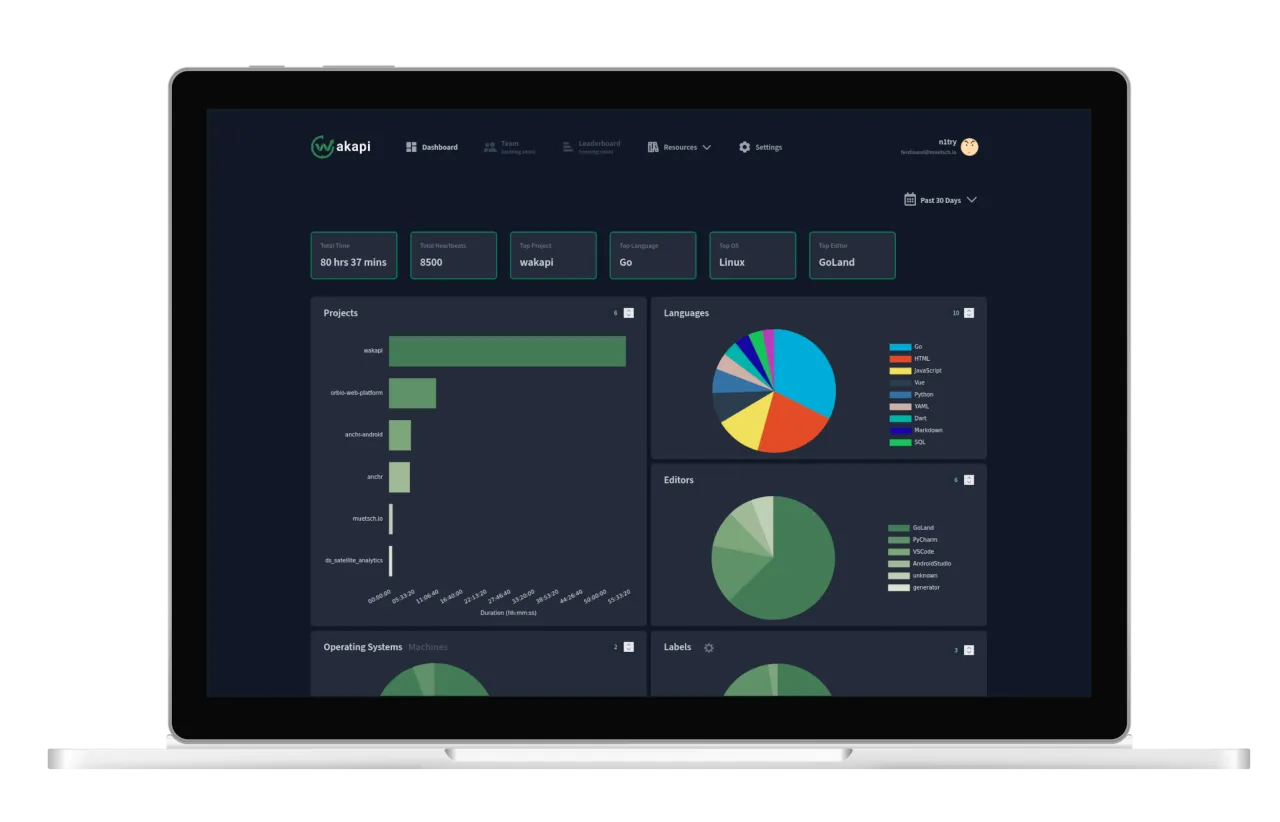
Wakapi, as it opens in a browser tab.
Not sure how to add Wakapi to your home screen? Step-by-step for Chrome, Safari, Firefox and Edge — it takes about ten seconds, and there is no app store involved.
Own Wakapi? Have us re-run this measurement — we open it in a real browser, cut the network, and send you what survived.
How to install Wakapi as a PWA
Screenshots
Are you the maker of Wakapi? Claim this listing →
Similar to Wakapi

Advanced to-do & time tracker with Jira/GitHub integration. Full offline support, open-source, no cloud sync required. The power-user task manager built for developers. Time entries can be pushed back to the issue tracker, which turns tracking into billing rather than a second chore.

Open-source product analytics, session replay, feature flags, and A/B testing. Self-hostable alternative to Mixpanel/Amplitude — know how users really use your product. Session replays link to the events that triggered them, so a funnel drop can be watched rather than inferred.

Interactive coding screencasts where you can pause and edit the instructor's code. Learn front-end development in a format you can't find anywhere else — truly hands-on learning.

Matrix-based secure messaging — the open-source Slack/Discord alternative. Decentralized, self-hostable, end-to-end encrypted. Your messages are never locked in a corporate server. Because Matrix is federated, two people on different servers can talk without either joining the other's platform.

Open-source, privacy-first web analytics. See your traffic without GDPR consent banners, without sending data to Google. Self-hostable, lightweight 1KB script, no cookies. The script is under 1 KB and sets no cookie, so it adds no consent banner and almost no page weight.

Open-source, self-hosted website analytics. Simple dashboard, real-time visitors, no tracking cookies. A clean GDPR-compliant Google Analytics replacement. No cookie is set and no personal data is stored, which is what removes the consent banner rather than hiding it.
Own a PWA? See the listing options — standard submission is free.